Raja Dahir: The Enigmatic Defender of Sindh
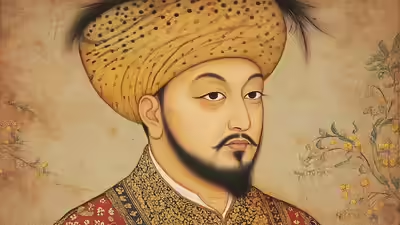
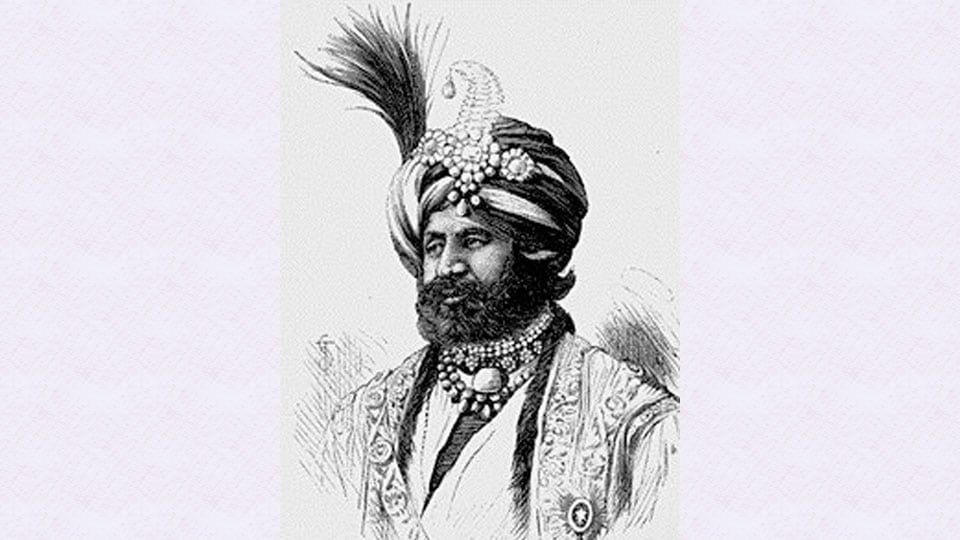
Raja Dahir was the last Hindu ruler of the Brahmin dynasty of Sindh, governing a prosperous and culturally diverse kingdom in the early 8th century. His reign marked the final chapter of an ancient civilization that stood at the crossroads of South Asia, Central Asia, and the Arab world.
Often remembered only for his defeat in 712 CE, Raja Dahir’s life and rule reveal a far more complex and dignified story — one of sovereignty, tolerance, resistance, and a deep commitment to his people.
The Kingdom of Sindh
The kingdom ruled by Raja Dahir encompassed much of present-day Sindh, with major centers such as :contentReference[oaicite:2]{index=2} and the strategic port of :contentReference[oaicite:3]{index=3}. Sindh was a land of trade, learning, and religious plurality, where Hindus, Buddhists, and others lived under a structured administrative system.
Contrary to later portrayals, historical records suggest that Raja Dahir allowed religious freedom and maintained diplomatic relations with neighboring regions. His court included scholars, administrators, and military commanders drawn from different communities.
The Often-Overlooked Context
One of the lesser-known aspects of Raja Dahir’s reign is the geopolitical pressure he faced from expanding empires. By the early 8th century, the Umayyad Caliphate had extended its reach across vast territories, and Sindh lay directly in the path of this expansion.
Historical sources indicate that Raja Dahir’s conflict with Arab forces was not rooted in religious hostility, but in his refusal to surrender sovereignty. His resistance represented a defense of regional independence rather than an ideological war.
The Battle Against the Invasion
In 712 CE, Arab forces led by :contentReference[oaicite:4]{index=4} invaded Sindh. Raja Dahir chose to confront the invasion militarily rather than submit, fully aware of the imbalance in resources and external support.
According to multiple accounts, Raja Dahir fought from the front, leading his army personally. His death on the battlefield symbolized the end of native rule in Sindh, but also immortalized him as a ruler who chose honor over capitulation.
The “Secrets” History Rarely Emphasizes
What history often neglects is that Raja Dahir was not defeated due to internal collapse, but due to geopolitical isolation. Several neighboring powers chose neutrality or silence, leaving Sindh to face one of the world’s most powerful empires alone.
Another rarely discussed aspect is the economic strength of Sindh under Dahir, driven by maritime trade, taxation reforms, and control of key trade routes. This prosperity was one of the reasons Sindh attracted external interest.
Legacy Beyond Defeat
Raja Dahir’s legacy is not one of failure, but of resistance. He represents the last stand of an indigenous political order in Sindh, and a reminder that history is often written by victors rather than witnesses.
Today, Raja Dahir is increasingly viewed as a symbol of regional identity, cultural continuity, and moral courage. His story invites readers to look beyond simplified narratives and rediscover the dignity of a ruler who chose to stand firm in the face of inevitable change.
In remembering Raja Dahir, we are not merely revisiting the past — we are reclaiming a forgotten chapter of South Asian history, rich with complexity, resilience, and quiet heroism.