The Iron Dome: Israel’s Missile Defense Shield/strong> is a mobile, all-weather air defense system developed by Israel to intercept short-range rockets, artillery shells, and mortar fire. It is designed to protect civilian populations and critical infrastructure from aerial threats.
Iron Dome was developed by :contentReference[oaicite:2]{index=2} in collaboration with the :contentReference[oaicite:3]{index=3}. The system became operational in 2011 and has since been deployed extensively during periods of conflict.
Why Iron Dome Was Developed
Israel faces frequent short-range rocket attacks from neighboring territories. Traditional missile defense systems were costly and ineffective against low-altitude, short-flight-time projectiles.
Iron Dome was designed specifically to counter this threat by providing rapid detection, tracking, and interception of incoming rockets within seconds of launch.
How Iron Dome Works
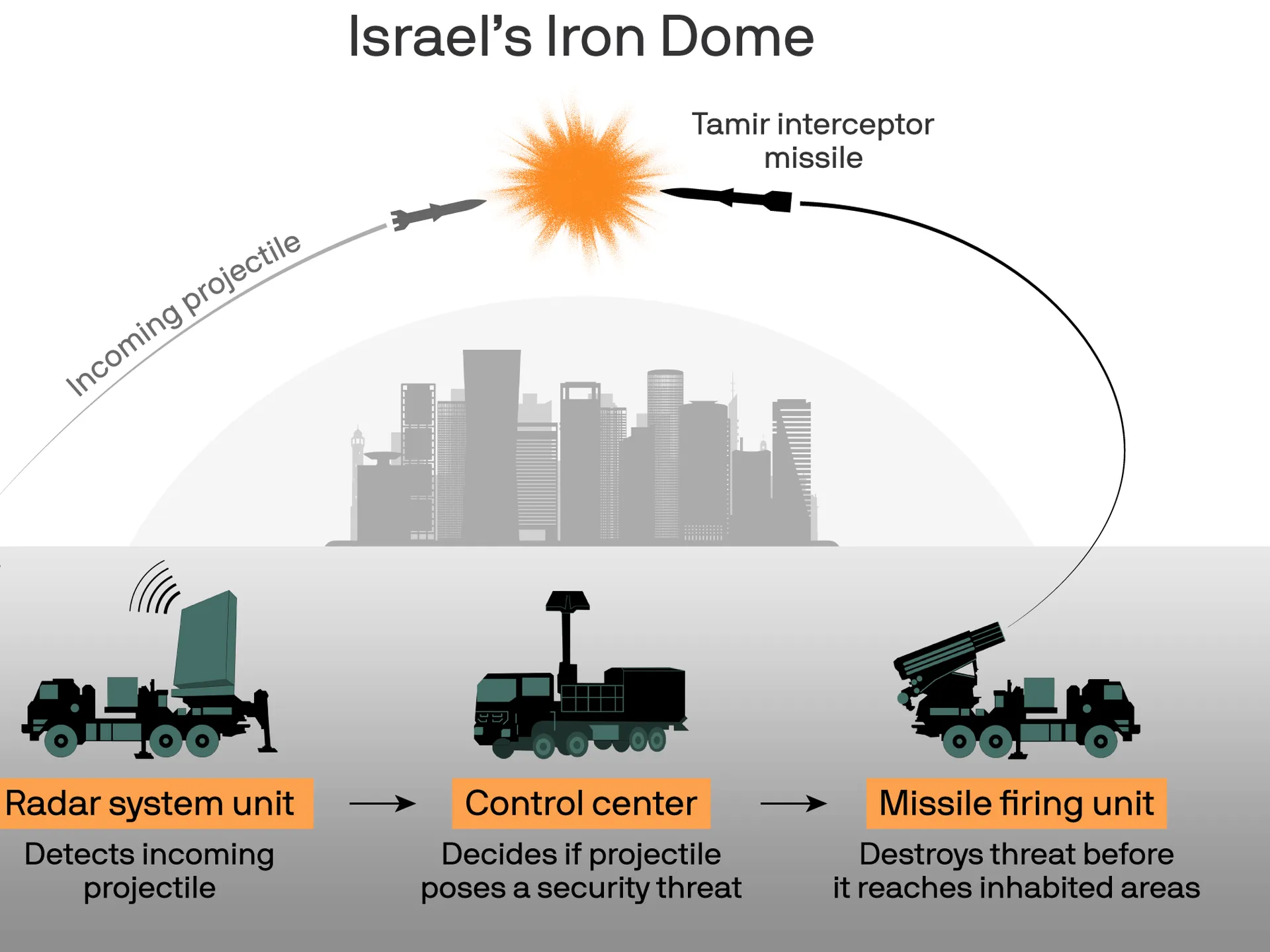
Each Iron Dome battery consists of three primary components:
- Detection and tracking radar
- Battle management and weapon control system
- Missile firing unit armed with Tamir interceptor missiles
When a rocket is launched toward Israeli territory, the radar detects it and calculates its trajectory. If the system determines that the rocket will land in a populated area or critical infrastructure, an interceptor missile is launched.
Rockets projected to fall in open or uninhabited areas are deliberately ignored, conserving interceptor missiles and reducing operational costs.
The Tamir Interceptor
Iron Dome uses the Tamir interceptor missile, which is equipped with advanced guidance systems and a proximity-fused warhead. The interceptor destroys incoming rockets mid-air, minimizing damage on the ground.
Operational Effectiveness
According to Israeli defense sources, Iron Dome has achieved interception success rates often reported above 85–90% during major escalations. Independent assessments acknowledge high effectiveness, though exact figures vary depending on engagement conditions.
The system has intercepted thousands of rockets since its deployment, significantly reducing civilian casualties and property damage.
Deployment and Coverage
Iron Dome batteries are mobile and can be rapidly repositioned based on threat assessments. Multiple batteries operate together to provide layered coverage across different regions of Israel.
The system is optimized for short-range threats, typically rockets with ranges between 4 and 70 kilometers.
International Support and Funding
The United States has provided significant financial assistance for the development and production of Iron Dome interceptors. Joint production arrangements allow components to be manufactured in both Israel and the United States.
Limitations
Despite its effectiveness, Iron Dome has limitations. Each interceptor missile is costly, and saturation attacks involving large numbers of rockets can strain the system.
Iron Dome is part of a broader, multi-layered missile defense network and is not intended to operate as a standalone solution.
Strategic Significance
Iron Dome has fundamentally altered Israel’s defensive posture by providing real-time protection for civilian areas. It has also influenced missile defense strategies worldwide, with several countries expressing interest in similar systems.
As conflicts evolve and rocket technology advances, Iron Dome continues to be upgraded to address emerging threats, remaining a central component of Israel’s national defense architecture.