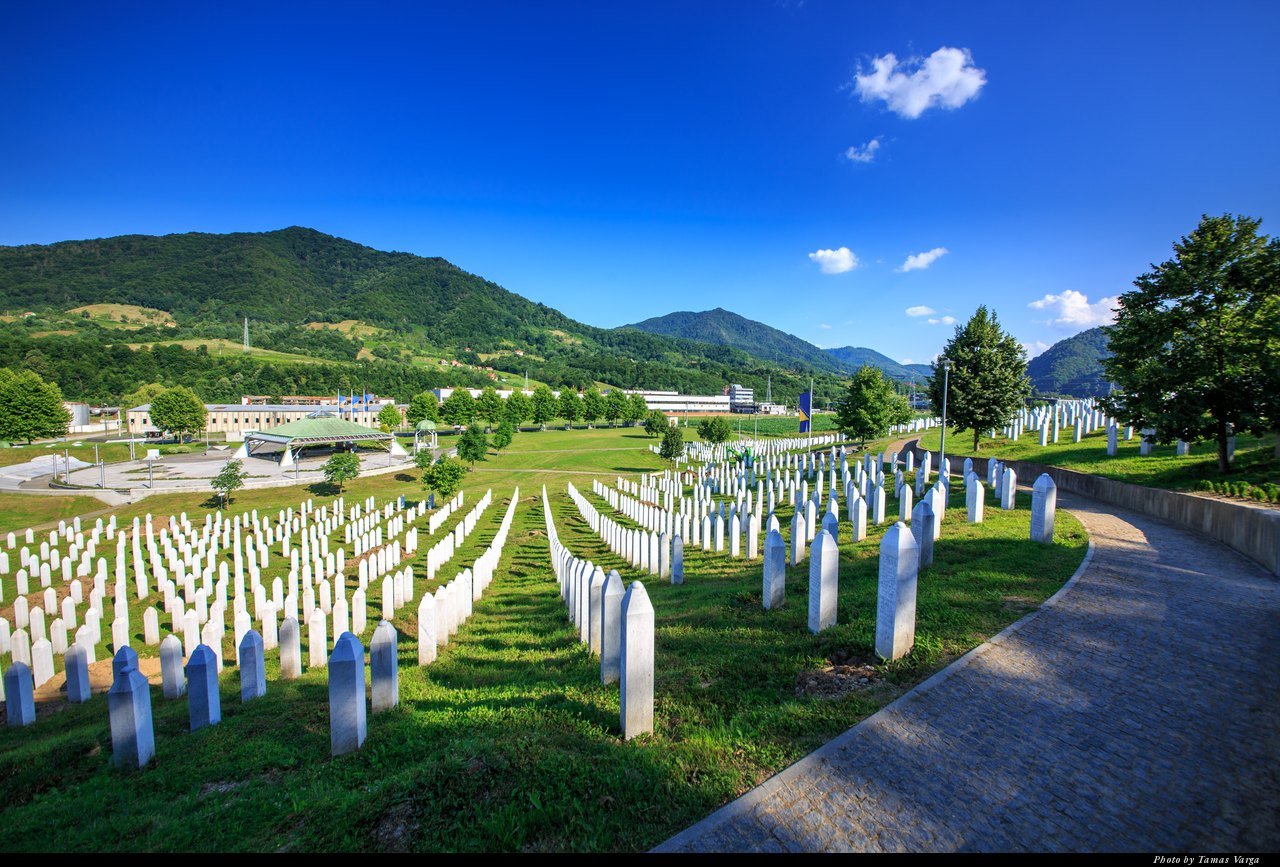
The Srebrenica Genocide Memorial and Cemetery/strong> is located in Potočari, near the town of Srebrenica in eastern Bosnia and Herzegovina. It commemorates the victims of the Srebrenica genocide, which occurred in July 1995 during the Bosnian War.
The memorial stands as a permanent reminder of one of the gravest crimes committed in Europe since the Second World War, where more than 8,000 Bosniak Muslim men and boys were systematically killed.
Historical Background
During the Bosnian War (1992–1995), Srebrenica was declared a United Nations–designated “safe area” intended to protect civilians from armed conflict. The town was guarded by a limited contingent of UN peacekeeping forces.
In July 1995, Bosnian Serb forces led by :contentReference[oaicite:2]{index=2} captured Srebrenica. Following the takeover, Bosniak men and boys were separated from women and children, who were forcibly displaced.
Over the following days, thousands of men and boys were executed at multiple locations. Their bodies were buried in mass graves, many of which were later disturbed to conceal evidence of the killings.
International Recognition as Genocide
The massacre at Srebrenica has been legally recognized as genocide by both the :contentReference[oaicite:3]{index=3} and the :contentReference[oaicite:4]{index=4}.
These rulings concluded that the killings were carried out with the intent to destroy, in part, the Bosniak Muslim population of the region.
The Memorial and Cemetery
The Srebrenica Genocide Memorial Center was established at the site of the former UN base in Potočari. Adjacent to the memorial is the cemetery, where identified victims of the genocide are buried.
Thousands of white marble gravestones line the cemetery, each marking the grave of a victim. Due to the complexity of identifying remains from mass graves, burials continue to take place as new victims are identified through DNA analysis.
Annual Commemorations
Every year on July 11, thousands of people gather at the memorial to mark the anniversary of the genocide. Newly identified victims are buried during this ceremony, often decades after their deaths.
Survivors, families of victims, international officials, and visitors from around the world attend these commemorations as an act of remembrance and solidarity.
Human and Social Impact
The genocide left deep psychological, social, and demographic scars on Bosnia and Herzegovina. Entire families and communities were destroyed, and many survivors continue to search for the remains of missing relatives.
The memorial serves not only as a burial ground but also as an educational center, aimed at preserving historical truth and preventing denial or distortion of events.
Legacy and Global Significance
The Srebrenica Genocide Memorial and Cemetery stands as a symbol of remembrance, accountability, and the consequences of international failure to protect civilians.
It reinforces the importance of confronting genocide, promoting justice, and ensuring that such crimes are neither forgotten nor repeated.